Myths & legends · 2 MIN
A twig against the sea
衔一枝木,面对大海
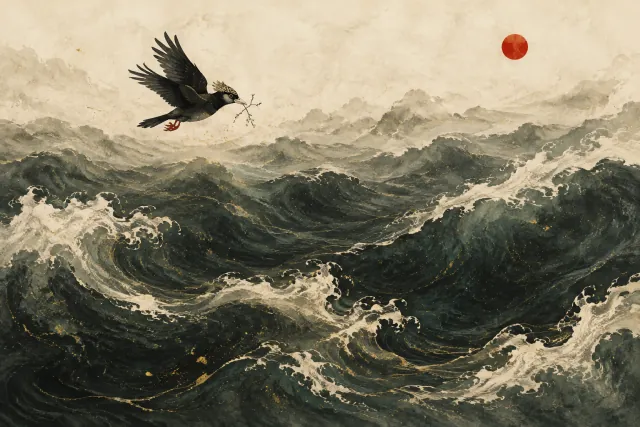
The Northern Mountains section of the Classic of Mountains and Seas describes Jingwei as a crow-like bird, with a patterned head, a white beak and red feet. It tells a story about transformation: Nüwa, a daughter of the Flame Emperor, drowned in the eastern sea and became this bird.
《山海经·北山经》写精卫形状像乌鸦,有花纹的头、白色的喙和红色的脚。原文说,炎帝的女儿女娃在东海溺水未归,后来化为精卫。
Jingwei repeatedly brings wood and stones from the western mountains to fill the sea. The passage does not give us a completed victory. It leaves us with an action, carried out again and again.
精卫常常衔着西山的木头和石子,要填住东海。原文没有写填海最终成功,而是留下一个不断重复的行动。
The tiny load and the vast water invite reflection on persistence. That is a reading of the image, not proof that the myth has only one lesson. Grief, refusal and determination can all remain in view without giving the bird an invented final speech.
小小的木石与辽阔的大海形成对比,让人想到坚持。这是一种读法,不是说神话只有一个道理。悲伤、不甘与决心都可以留在画面里,不必替精卫编造最后的宣言。
The name 女娃 in this passage is not 女娲, the creator figure familiar from other myths. Keep those names apart. The bird belongs to a mythic account, not a field guide to a real species.
这里的“女娃”与其他神话中的创造者“女娲”不是同一个名字。读这个故事时,要把二者分清。精卫属于神话叙述,不是现实物种图鉴。
Sources & reading notes
Original bilingual retelling of a mythic passage in the Classic of Mountains and Seas. Interpretation is distinguished from the source; no biological claim.
- Classic of Mountains and Seas · Northern Mountains, Fajiu Mountain passage
Locate 又北二百里,曰發鳩之山 and 精衛. Use this passage rather than conflating later versions or 女娃 with 女娲.
The iPhone app adds private saving, contextual vocabulary and optional practice. No video or account is required to read.