History · 2 MIN
A horizon crossed more than once
一次又一次,驶向远方
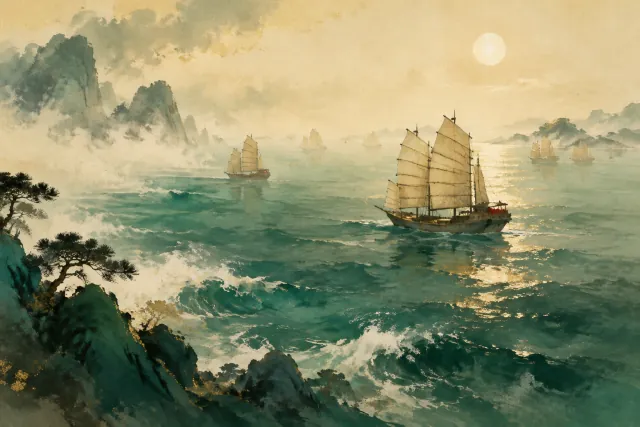
A National Museum exhibition announcement preserved by China’s Ministry of Culture describes seven voyages led by Zheng He between 1405 and 1433. The routes passed through Southeast Asia and the Indian Ocean. Those dates belong to the Ming period, not to a single uninterrupted trip.
文化部门保存的一则国家博物馆展览介绍记载,郑和在1405年至1433年间率船队七下西洋,经过东南亚与印度洋。这些年代属于明代,七次航行也不是一次没有中断的旅行。
Think of the word voyages in the plural. Returning, preparing and setting out again change the picture: maritime history involves repeated journeys and contact, not only a dramatic first departure.
不妨留意“七次”这个说法。返回、准备、再次出发,让画面不再只是一次壮观的启航。海洋历史中还有反复的往来与接触。
The illustration here is an artistic evocation of sailing. It is not evidence for a precise ship design, fleet size or route. Those questions need more detailed records; a beautiful picture should not quietly answer them for us.
配图是对航海的艺术想象,不是特定船型、船队规模或航线的证据。这些问题需要更细致的资料;一张漂亮的图片不应悄悄替我们作答。
A useful question to carry forward is how repeated journeys connect places. You can follow a person, an object or a written record through that question. Keep each kind of evidence distinct: a museum object, a voyage account and a later novel do not tell the same story in the same way.
接下来可以追问:反复的航行如何连接不同地方?我们可以从人物、物件或文字记录入手,同时分清证据的种类。馆藏实物、航行记载与后来的小说,不会用同样的方式讲述历史。
Sources & reading notes
Concise historical introduction using a museum exhibition notice for basic chronology. No exact ship reconstruction or unsupported route map; wider historical debates are outside this short reading.
- Ministry of Culture · National Museum Zheng He exhibition announcement
Page dated 28 June 2005; used for the basic seven-voyage 1405–1433 chronology and regional scope, not its superlative or wholly peaceful characterization.
The iPhone app adds private saving, contextual vocabulary and optional practice. No video or account is required to read.